You can go to the gym three times a week for a year and barely change if you’re doing the same thing every session… because what’s missing is progressive overload. Progressive overload is the reason some people see results and others don’t. It’s also one of the least complicated ideas in fitness once someone just explains it plainly.
So here it is.
What Is Progressive Overload?
Progressive overload means consistently giving your muscles slightly more than they’re used to. When your body adapts to a certain level of stress, you increase it, A bit more weight, a few more reps, an extra set, a shorter rest. Your muscles respond by getting stronger, bigger, or more enduring, depending on how you apply it.
That’s it. That’s the whole concept.
The opposite of progressive overload is doing exactly the same workout every session and wondering why nothing’s changing. If you’ve been lifting the same weight for the same reps since January, your body stopped adapting months ago.
Why It’s the Foundation of All Gym Progress
Your muscles are adaptive. Put them under stress, they respond by growing. Stop increasing the stress, they stop adapting. This applies regardless of your goal, be it fat loss, muscle gain, strength, endurance. All of them require some form of progressive overload to keep moving forward.
It’s also why beginners make such fast progress in their first few months. Almost any increase in training stress produces a response when you’re new to it. As you get more experienced, you have to be more deliberate about how and when you increase the challenge.
Four Practical Ways to Apply Progressive Overload
You don’t need to add weight every single session. There are several ways to progressively overload a workout so use whichever fits your current stage:
1. Add weight
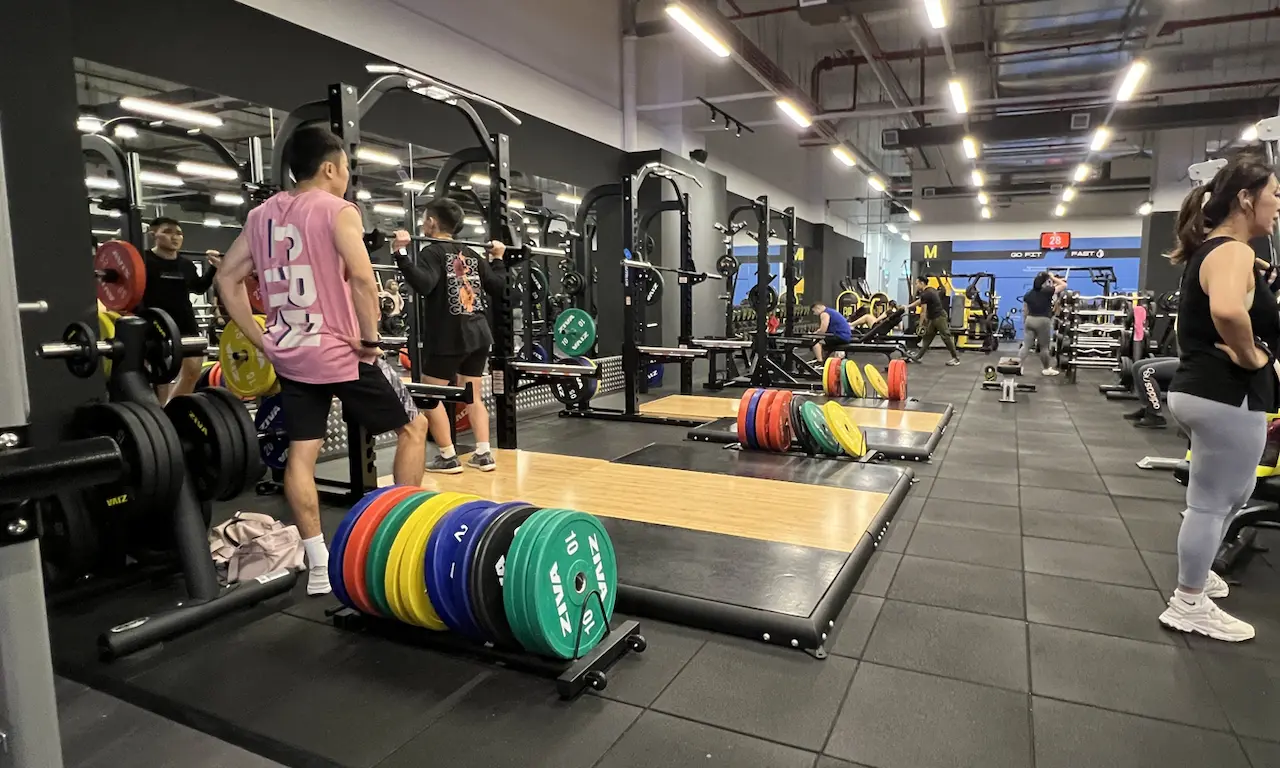
The most straightforward method. If you squatted 40kg for 3 sets of 10 last week, try 42.5kg this week. Even small jumps – 1.25kg per side – count as progressive overload. At GoFit Toa Payoh in Singapore or GoFit Alam Sutera in Indonesia, the dumbbell ranges go high enough to keep challenging you for a long time.
2. Add reps
If you did 3 sets of 8 last week, aim for 3 sets of 9 or 10 this week before increasing the weight. Once you can comfortably do the higher rep count, add weight and drop back to the lower end of your rep range.
3. Add sets
Going from 3 sets to 4 sets increases total training volume without touching the weight or reps. Useful when you’ve been at a plateau but aren’t ready to add load.
4. Reduce rest time
Doing the same work in less time is a form of progressive overload. If you were resting 90 seconds between sets, try 75. Your heart rate and muscular fatigue will tell you quickly if you’ve increased the challenge.
How Often Should You Progress?
For beginners, progressing every one to two weeks is realistic, sometimes faster. Your nervous system adapts quickly early on, meaning strength gains can come without much change to the muscle yet. Take the progress when it’s available.
For intermediate lifters, progressing every two to four weeks per exercise is more common. Some movements (like the deadlift) progress more slowly than others (like rows or curls). That’s normal.
The important thing is that the direction is always forward, even if the steps are small.
Remember, consistency matters here too.
How to Track It
You can’t progressively overload what you can’t remember. Keep a note, in your phone, or on paper, of what weight you lifted, how many reps you did, and how many sets. That record is what tells you whether you’re actually making progress or just feeling like you are.
A session might look like this:
- Squat: 60kg × 3 × 8 ✓
- Bench press: 45kg × 3 × 10 ✓
- Lat pulldown: 55kg × 3 × 10 ✓
Next session, you’re aiming to beat at least one of those numbers somewhere. Add a rep to one exercise. Add a kilo to another. That’s progressive overload in practice.
Common Mistakes to Avoid
Trying to progress too fast. Jumping from 40kg to 50kg in a week isn’t progressive overload — it’s setting yourself up for poor form and potential injury. Small, consistent increases beat large, erratic ones every time.
Only adding weight, never adding volume. Progressive overload can come from increasing total sets and reps, not just load. Mixing both over time is more sustainable than trying to add weight to every exercise every week.
Ignoring deload weeks. After several weeks of progressive loading, your body sometimes needs a lighter week to recover properly. Dropping to 60-70% of your usual weights for one week isn’t going backwards — it’s setting you up to go further.
Not tracking your workouts. If you don’t know what you lifted last session, you can’t know whether you’ve progressed. It doesn’t need to be complicated. A note in your phone is enough.
Progressive Overload and Your Current Programme
If you’re not sure how to apply this to your own training — what to increase, when, and by how much — a GoFit personal trainer can build a programme around it from session one. Whether you’re at GoFit City Hall in Singapore, GoFit Plaza Mont Kiara in Kuala Lumpur, or GoFit Harapan Indah in Bekasi, the trainers work with you on exactly this. Read more about personal training at GoFit if you want to know what that looks like in practice.
And if you want to understand how to structure your reps and sets around progressive overload, our reps vs sets guide and the beginner’s rep and set guide both cover it from different angles.
Put progressive overload into action.
Track your lifts, beat your numbers, and keep the progress going — at a GoFit near you.
Malaysia: Plaza Mont Kiara · Sunway Square · i-City Shah Alam · Seremban · Penang | Singapore: City Hall · Toa Payoh · Geylang · Great World · Changi · Choa Chu Kang · Clementi | Indonesia: Alam Sutera · Harapan Indah · Trans Studio Cibubur
Frequently Asked Questions
What is progressive overload in simple terms?
Progressive overload means gradually making your workouts harder over time so your muscles keep adapting and getting stronger. This can mean adding more weight, doing more reps, adding more sets, or reducing rest time between sets.
How often should I apply progressive overload?
Beginners can often progress every one to two weeks per exercise. More experienced lifters might progress every two to four weeks. The key is that progress is happening consistently over time, even if the individual steps are small.
Do I have to add weight every session?
No. Adding weight is one way to apply progressive overload, but not the only one. You can also add reps, add sets, or reduce rest time. Mixing these methods over time is more sustainable than trying to add load every single session.
What happens if I stop applying progressive overload?
If you do the same workouts repeatedly without increasing the challenge, your body stops adapting. Strength, muscle, and fitness levels tend to plateau and, over a longer period, can decline if training volume drops significantly.
Is progressive overload safe for beginners?
Yes, and it’s especially effective for beginners. The increases don’t need to be large — even one extra rep or 1-2kg more per session counts. The important thing is keeping form correct as the load increases, which is where a personal trainer can be genuinely useful early on.