If you’ve ever stared at the gym floor wondering whether to squat or do a leg extension, you’ve already stumbled into the compound vs isolation exercises debate. It sounds technical. But it isn’t at all.
In this guide, we break it down in our fuss-free way.
What Are Compound Exercises?
Compound exercises work multiple muscle groups at the same time, using more than one joint to complete the movement. A squat, for example, works your quads, hamstrings, glutes, and core simultaneously. A bench press hits your chest, shoulders, and triceps in one go.
Because they recruit so many muscles at once, compound movements are incredibly efficient. You get more done in less time, and the total muscle stimulus is higher than most isolation exercises can match.
Common compound exercises you’ll find at any GoFit gym:
- Squat — quads, hamstrings, glutes, core
- Deadlift — back, hamstrings, glutes, core, forearms
- Bench press — chest, shoulders, triceps
- Pull-up / lat pulldown — back, biceps, core
- Overhead press — shoulders, triceps, upper chest
- Barbell or dumbbell row — back, biceps, rear deltoids
What Are Isolation Exercises?
Isolation exercises target a single muscle group using one joint. A bicep curl, for example, pretty much only works your bicep. A leg extension focuses almost exclusively on your quads.
They have a place but it’s a supporting role, not the main act.
Common isolation exercises:
- Bicep curl — biceps only
- Tricep pushdown — triceps only
- Leg extension — quads only
- Leg curl — hamstrings only
- Lateral raise — side deltoids
- Calf raise — calves
Compound vs Isolation: The Core Differences
| Feature | Compound | Isolation |
|---|---|---|
| Muscles worked | Multiple groups | One group |
| Joints involved | Two or more | One |
| Calorie burn | Higher | Lower |
| Skill required | Moderate to high | Low |
| Best for | Overall strength and size | Targeting weak points |
| Best time to use | Start of workout | End of workout |
Which One Should You Be Doing?
Both. But not equally, and not in the same order.
For most gym-goers, especially beginners, the smart approach is to build your workouts around compound movements and add isolation exercises where needed. Here’s why:
Compound lifts give you more return on time invested. Three to four compound exercises can work your entire body in a single session. If you spent the same time on isolation work, you’d barely touch three muscle groups. For anyone training three times a week or less, compound-first is simply the more efficient choice.
Isolation exercises become more useful as you get more experienced. They’re good for targeting a muscle that isn’t growing as fast as the others, bringing up a lagging body part, or adding volume to a specific area without fatiguing your whole body before a heavy compound set. They’re also lower-risk for certain injuries, since less load is distributed across fewer joints.
A Simple Way to Structure Your Workout
Think of it in two halves:
- Compound first — when your energy and focus are at their highest. Squat, deadlift, bench press, row, overhead press. These take the most out of you and deserve your best effort.
- Isolation second — once the heavy work is done. Bicep curls, tricep pushdowns, lateral raises, leg curls. Good for rounding out the session without demanding your peak performance.
A straightforward example for a full-body beginner session at GoFit Plaza Mont Kiara or GoFit Sunway Square:
- Goblet squat × 3 sets of 10 (compound — quads, glutes, core)
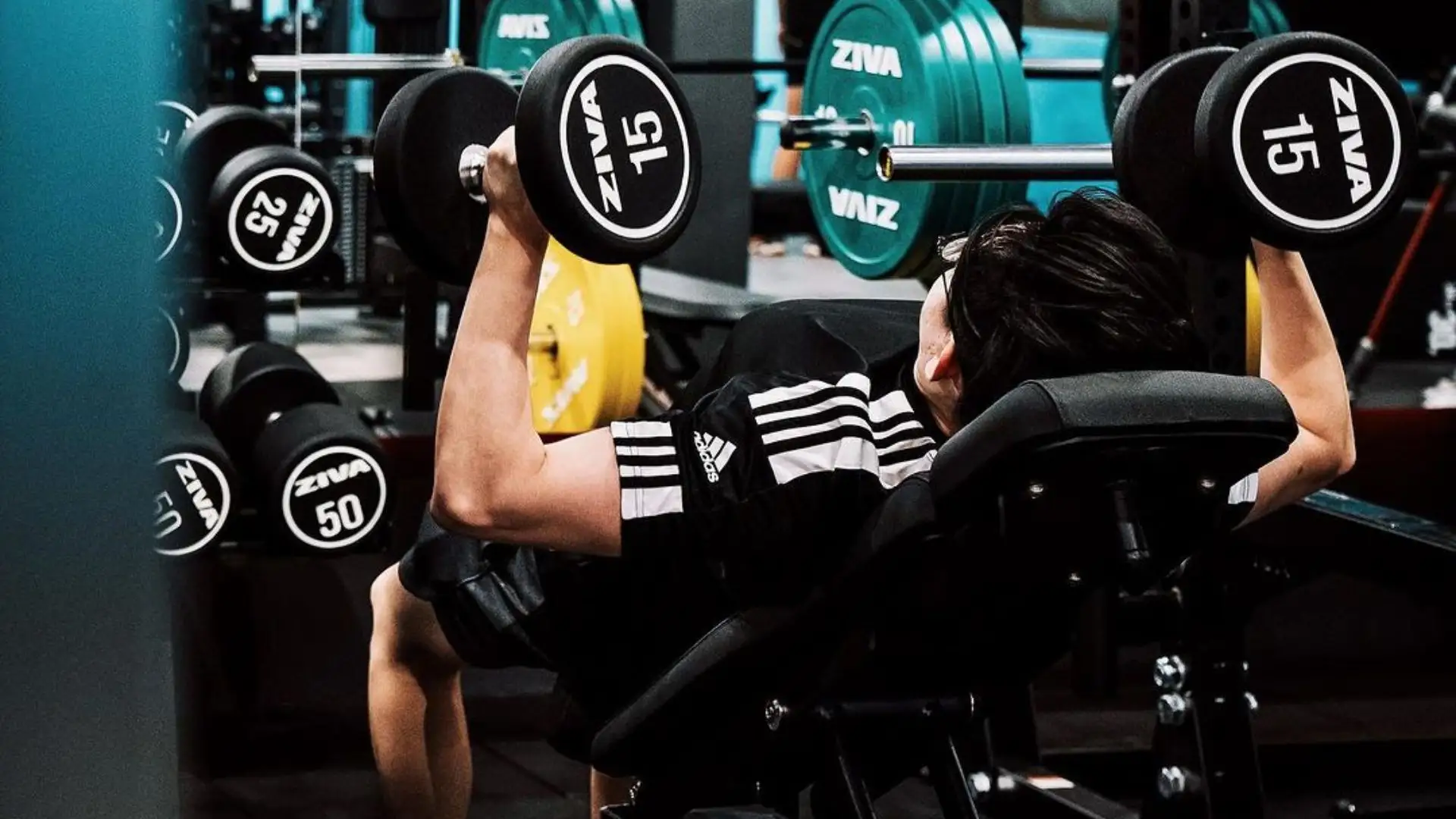
- Dumbbell bench press × 3 sets of 10 (compound — chest, shoulders, triceps)
- Lat pulldown × 3 sets of 10 (compound — back, biceps)
- Dumbbell Romanian deadlift × 3 sets of 10 (compound — hamstrings, glutes, back)
- Bicep curl × 2 sets of 12 (isolation — finishing touch)
- Tricep pushdown × 2 sets of 12 (isolation — finishing touch)
That’s a complete, well-balanced session. Six exercises, roughly 45 minutes, and you’ve hit every major muscle group.
What If You’re Still a Beginner?
Keep it simple: two to three compound exercises per session, three sessions a week. Don’t overthink the isolation work yet. Your whole body is still adapting to resistance training, which means almost anything will work at this stage. What matters most is showing up consistently and gradually adding weight or reps over time… that’s progressive overload in its simplest form.
If you’re not sure where to start with the actual exercises, our beginner’s guide to gym equipment walks through what everything does so you’re not guessing when you walk in.
What If You’re More Experienced?
The compound-first principle still applies, but your ratio shifts. You might do four compound exercises and three to four isolation exercises per session, or run dedicated muscle-group days where you finish a heavy compound set and then really target the smaller muscles around it. At this point, isolation work isn’t optional — it’s what fills in the gaps that compound movements don’t quite reach.
Our reps vs sets guide is a good reference for how to structure this once you’re past the beginner stage.
Ready to put this into practice?
GoFit has fully equipped gyms across Malaysia, Singapore, and Indonesia — with free weights, squat racks, and all the machines you need to run a proper compound-first workout.
Malaysia: Plaza Mont Kiara · Sunway Square · i-City Shah Alam · Seremban · Penang | Singapore: City Hall · Toa Payoh · Geylang · Great World · Changi · Choa Chu Kang · Clementi | Indonesia: Alam Sutera · Harapan Indah · Trans Studio Cibubur
Frequently Asked Questions
What is the difference between compound and isolation exercises?
Compound exercises work multiple muscle groups at once using more than one joint like squats, deadlifts, and bench presses. Isolation exercises focus on a single muscle using one joint, like bicep curls or leg extensions. Compound movements are generally more efficient for building overall strength; isolation exercises are used to target specific muscles.
Should beginners do compound or isolation exercises?
Beginners should focus primarily on compound exercises. They work more muscles in less time, build a solid strength foundation, and deliver better overall results when you’re starting out. Isolation exercises can be added as finishing work once the main compounds are done.
Is a squat a compound or isolation exercise?
A squat is a compound exercise. It works the quads, hamstrings, glutes, and core simultaneously, making it one of the most effective single exercises you can do.
Can you build muscle with just isolation exercises?
Technically yes, but it’s inefficient. You’d need a large number of isolation exercises to cover the same muscle volume that a handful of compound movements can provide. Most experienced gym-goers use isolation exercises to complement compounds, not replace them.
How many compound exercises should I do per workout?
For beginners, two to four compound exercises per session is a solid starting point. For more experienced lifters, three to five is common, depending on the session’s focus and overall training volume.