Getting back to the gym after a long break is a different experience from starting for the first time. You know how the machines work. You remember what it felt like to be consistent. And you also remember what you used to be able to do, which is exactly what makes coming back harder than it looks. The gap isn’t just physical. It’s the distance between who you were and where you’re starting from, and that gap has a way of feeling very loud when you walk back through the gym door.
This guide is for the people who’ve been away, be it six months, a year, maybe longer, and are trying to figure out how to begin again without making the whole thing worse than it needs to be.
Why returning feels different from starting
First-time gym-goers don’t know what they’re missing yet. Returners do. You have a baseline – your old numbers, your old routine, the version of yourself that found it easy, and you’re measuring the present against that. It creates a specific kind of self-consciousness that beginner anxiety doesn’t quite cover.
The good news: muscle memory is real. Your body has done this before. The neuromuscular patterns that made you efficient at movements don’t fully disappear during a break, they just go quiet. Strength and fitness come back faster the second time, usually significantly faster. The frustrating part is that this doesn’t mean the first few weeks feel easy. They don’t. It means week four looks very different from week one.
What actually happens to your fitness after a break?
The specifics depend on how long you were out and what you were doing before.
Cardiovascular fitness starts to decline after about two weeks of inactivity. After a month away, you’ll notice it in your breathing during cardio or anything that gets your heart rate up. After three months or more, the drop is more substantial but it’s also the first thing to come back once you start again.
Strength drops more slowly than most people expect. After a few weeks off, strength losses are minimal. After three to six months, you might be working at 60 to 80 percent of where you were. After a year or longer, the loss is more significant but again, the return curve is faster than the original learning curve was.
The part that surprises most returners: soreness hits harder than expected, even at lighter weights. This isn’t a sign that you’ve lost everything. It’s a sign that your muscles are adapting again. It passes within two to three weeks.
The mistake most people make when they come back
They try to return to where they left off.
It makes complete sense emotionally. You remember your old routine, you want to get back to it, and going lighter feels like admitting something. But starting at your previous level after a long break is the fastest route to injury and the second-fastest route to quitting. Connective tissue, tendons, ligaments, doesn’t recover as quickly as muscle, and it doesn’t signal distress until it’s already under too much stress.
The practical fix: start at roughly 50 to 60 percent of your previous weights or pace, and add load or intensity gradually each week. It feels conservative. That’s the point. Four weeks of progressive, uninjured training will get you back further than one session that puts you flat for two weeks.
A simple framework for your first four weeks back
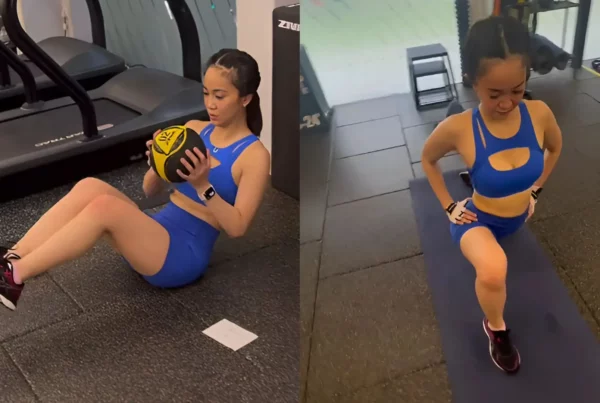
Week one is about getting your body remembering the movements. Three sessions of full-body work, shorter than you used to do, lighter than you used to lift. Don’t go to failure. Don’t push pace. Leave the gym feeling like you could have done more because you should have.
Week two, add a little. Slightly more weight, slightly more volume. Soreness from week one should be fading. Notice that the movements are starting to feel more natural again. That’s muscle memory doing its job.
Week three, you can push a bit more on the compound movements – squat, deadlift, press, row. The progressive overload guide explains exactly how to add load gradually without stalling or overdoing it.
By week four, you’re training rather than just returning. The gap between where you are and where you were is already closing.
What to do about the psychological part
This is real and it doesn’t get talked about enough. Coming back to the gym after a long break involves a particular kind of vulnerability. You’re aware of your reduced capacity in an environment where you previously had more. That awareness makes some people avoid the gym entirely. Others push past it and hurt themselves. Neither is the answer.
A few things that actually help:
Go at a quieter time for your first few sessions. Not because you should hide, but because lower foot traffic means fewer distractions and less background noise while you’re finding your feet again. Ask GoFit staff what the quieter hours are because every club is a bit different.
Don’t compare your week-one session to your previous best. Compare it to last week. Progress across the first month of a comeback is genuinely fast and noticing it is one of the most motivating things that can happen. This is where a training log, even a basic one, pays off. Write down weights and reps. The numbers go up quickly when you’re a returner, and seeing that is useful.
And if you’re dealing with gym anxiety on top of returning after a break, the overcoming gym anxiety guide covers a lot of the same ground from a slightly different angle. It’s worth reading alongside this one.
GoFit’s membership is built for this
One of the practical barriers to coming back is the contract question. If you stopped going to a gym with a 12-month membership while you were out, paying for months you didn’t use is a real deterrent to signing up somewhere again.
GoFit doesn’t work that way. The membership is flexible and month-to-month, which means when life next gets in the way, you’re not paying for a gym you can’t reach. For someone who’s returned to training before and knows their own pattern, that matters.
Ready to come back? Find your nearest GoFit.
No judgment. No 12-month contracts. Just a gym that makes it easy to start again, whenever you’re ready.
Malaysia: Plaza Mont Kiara · Sunway Square PJ · i-City Shah Alam · Seremban · Penang | Singapore: City Hall · Toa Payoh · Geylang · Great World · Changi · Choa Chu Kang · Clementi | Indonesia: Alam Sutera · Harapan Indah · Trans Studio Cibubur
Frequently asked questions
How long does it take to get your fitness back after a long break?
It depends on how long you were away and what your baseline was. Cardiovascular fitness typically starts returning within two to four weeks of consistent training. Strength returns faster than most people expect, often reaching 80 percent of your previous level within four to six weeks. Muscle memory means the return curve is faster than the original learning curve was.
Should I start at the same weights I used before my break?
No. Start at around 50 to 60 percent of your previous weights and build up over four to six weeks. Connective tissue doesn’t adapt as quickly as muscle, and returning at full intensity is the most common cause of injury and early dropout. Going lighter initially is strategy, not weakness.
Why am I so much more sore when I come back to the gym?
DOMS (delayed onset muscle soreness) hits harder when your muscles haven’t trained in a while, even at weights that used to feel easy. This isn’t a sign that you’ve lost everything. It’s a sign your muscles are adapting again. It typically eases significantly after two to three weeks of consistent training.
Is it normal to feel embarrassed or self-conscious returning to the gym?
Very normal. Returning after a break involves being aware of reduced capacity in an environment where you previously performed better. The feeling is real, and it passes, usually within the first two to three weeks as your body starts responding and your confidence builds. Going at quieter times can help while you’re finding your footing again.
How many times a week should I train when coming back after a break?
Start with two to three sessions per week of full-body training. This is enough stimulus to drive fast progress while giving your body recovery time between sessions. Adding a fourth session can come in month two, once soreness has settled and your body has re-adapted to the movement patterns.
What’s the difference between returning to the gym and being a first-time gym-goer?
First-time gym-goers are learning movements and building the habit from scratch. Returners already have the habit history and the movement patterns — the challenge is managing expectations about where they’re starting from and rebuilding without trying to skip the process. The psychological starting point is different, which is why advice aimed at complete beginners doesn’t always land for someone who’s coming back.