Search “weight gain workout” and most of what comes up is written for men: bigger calorie surpluses, heavier lifting targets, and advice that doesn’t quite fit if you’re a woman trying to put on weight or build noticeable strength. The training principles are similar, but the details, how much to eat, how fast to expect results, and what actually changes, are different enough to matter. After all, women are not small men.
Here’s a beginner-friendly weight gain workout and eating plan built around how women’s bodies typically respond to training.
No, You Won’t Get “Bulky”
This is the concern that stops a lot of women from picking up weights in the first place, and it’s worth addressing directly: lifting weights will not make you bulky by accident. Visible muscle bulk takes years of dedicated training, a large and sustained calorie surplus, and often a training approach most beginners aren’t using. What strength training actually does for most women is build a leaner, more defined shape, not add unwanted size.
How Many Calories You Need (And Why It’s Different From Generic Advice)
Most general weight-gain advice recommends 300 to 500 extra calories a day. For women, the useful starting range is a bit lower, typically 150 to 350 calories above your normal daily intake. This accounts for differences in body composition and hormones between men and women, and it’s enough to support steady, healthy weight gain without adding excess fat.
A good way to check it’s working: aim for around 0.25kg of weight gain per week. If you’re gaining faster than that, you’re likely eating more than you need; slower, and you may need a slightly bigger surplus.
A Beginner Weight Gain Workout: 3 to 4 Days a Week
Consistency matters more than volume here. Three to four sessions a week, with proper rest between, is enough to see real progress without burning out.
Day 1: Lower Body
- Goblet squats or barbell squats — targets quads, glutes, core
- Romanian deadlifts — targets hamstrings and glutes
- Hip thrusts — targets glutes
Day 2: Upper Body
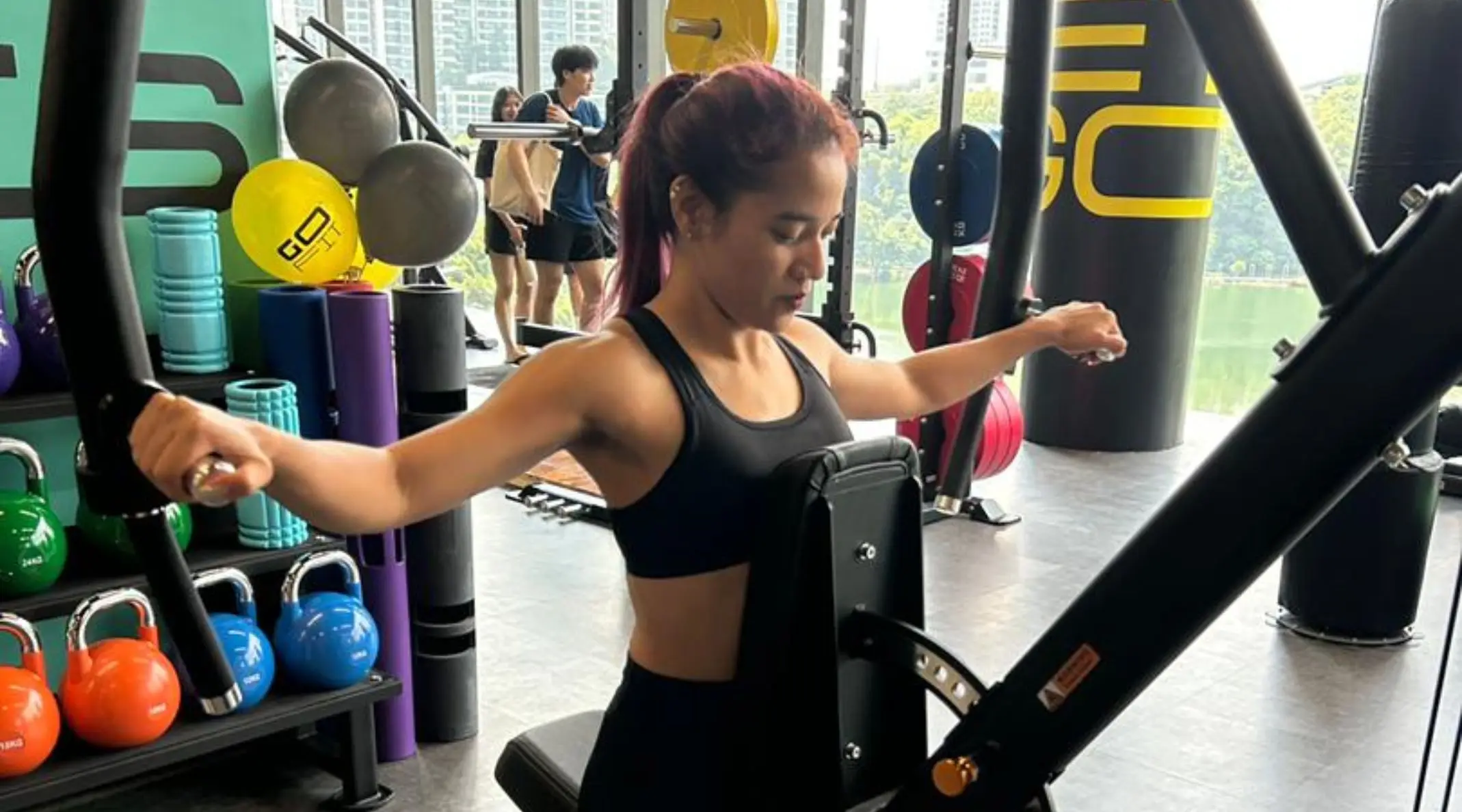
- Dumbbell or machine chest press — targets chest, shoulders, triceps
- Seated cable rows or dumbbell rows — targets back and biceps
- Assisted pull-ups or lat pulldown — targets lats and biceps
Day 3: Full Body
- Deadlifts — targets back, glutes, hamstrings
- Overhead press — targets shoulders
- Plank or weighted carries — targets core
Day 4 (optional): Repeat Day 1 or Day 2, or add light cardio for general health without cutting into your calorie surplus.
Aim for 3 sets of 8 to 12 reps per exercise, resting 60 to 90 seconds between sets. New to the terminology? Our reps vs sets guide explains exactly what that means.
What to Eat to Support It
Build your surplus calories around protein (chicken, eggs, fish, tofu, legumes), whole carbs (rice, oats, wholegrain bread), and healthy fats (avocado, nuts, olive oil). Protein especially matters here, since it’s what your body uses to actually build muscle rather than just store extra calories as fat.
For practical meal ideas, check our guide to pre-workout meals and post-workout meals.
What to Actually Expect, Week by Week
Strength gains tend to show up first, often within 2 to 3 weeks, since your nervous system adapts to lifting before your muscles visibly change. Visible shape changes usually follow around 6 to 8 weeks in, provided you’re training consistently and eating enough. Try not to judge progress by the scale alone; how your clothes fit and how much you’re lifting are often better indicators than the number you see each morning.
Frequently Asked Questions
Will lifting weights make me bulky?
No. Building visibly bulky muscle requires years of dedicated training, a significant calorie surplus, and often genetics or training methods most beginners aren’t using. For most women, strength training builds a leaner, more toned appearance rather than bulk.
How many calories should women eat to gain weight?
Most women do well adding around 150 to 350 calories above their daily maintenance level, slightly less than the 300 to 500 calorie range typically recommended for men. This accounts for differences in body composition and hormones, and supports steady gains of about 0.25kg per week without excess fat gain.
How often should women strength train to gain weight?
Three to four sessions per week is a solid starting point for most women, with at least one rest day between sessions that target the same muscle groups. This allows enough recovery time while still providing a consistent training stimulus.
How long until I see results?
Most beginners notice strength improvements within 2 to 3 weeks, and visible changes in shape or size within 6 to 8 weeks of consistent training and eating. Weight gain on the scale is usually noticeable within 3 to 4 weeks of eating in a steady surplus.
Want a Plan Built Around You?
This guide gives you a solid starting point, but everyone’s body responds a little differently. GoFit’s personal trainers can build a plan around your specific goals and check your form from day one. Find your nearest GoFit gym to get started.