Before You Go: The Five Minute Setup
What to actually bring
Trainers with a flat sole, comfortable clothes you can move in, a water bottle, a towel, and your phone if you want to keep notes. That is the entire list. You do not need gloves, a belt, a shaker, or special equipment. Those are purchases for a version of you who has already been going for six months.
Book the induction
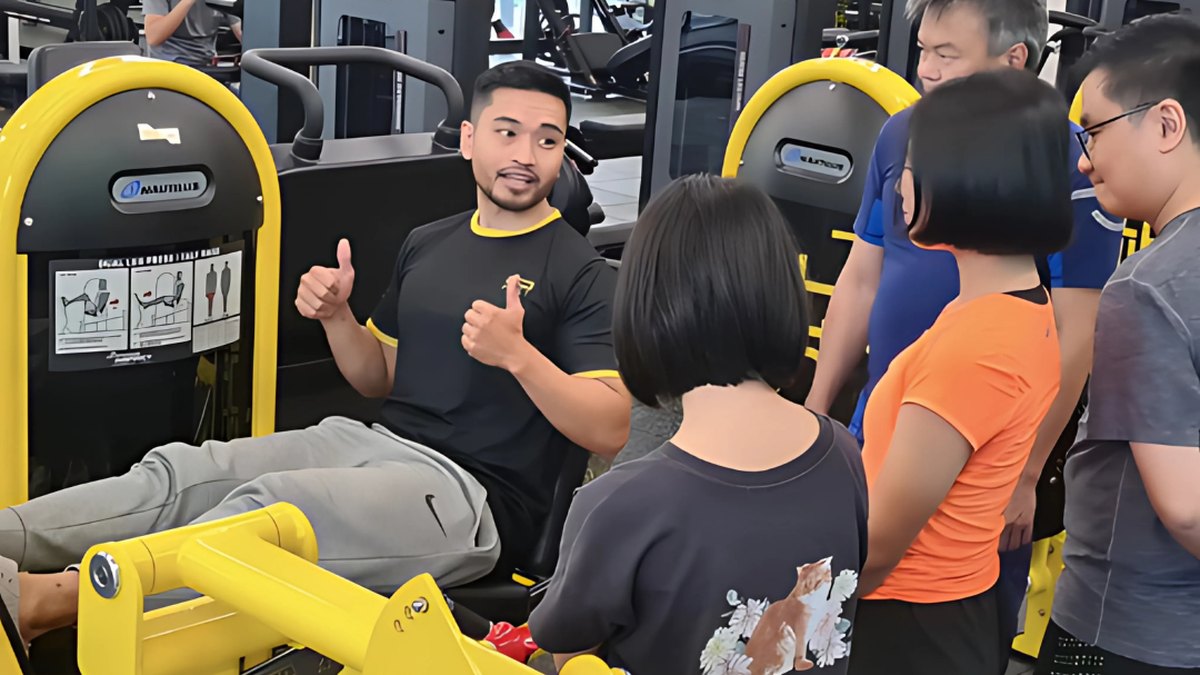
If your gym offers a free induction or an introductory session, take it. Somebody walks you around, shows you how the machines adjust, and answers the questions you feel silly asking. It removes most of the anxiety in one go and it usually costs nothing.
Decide your days in advance
Pick two or three specific days and write them down. Not “three times a week”, which is a wish. Tuesday, Thursday, Saturday, which is a plan.
Week One: Show Up and Learn the Room
The goal this week is not fitness. It is familiarity.
Sessions one and two
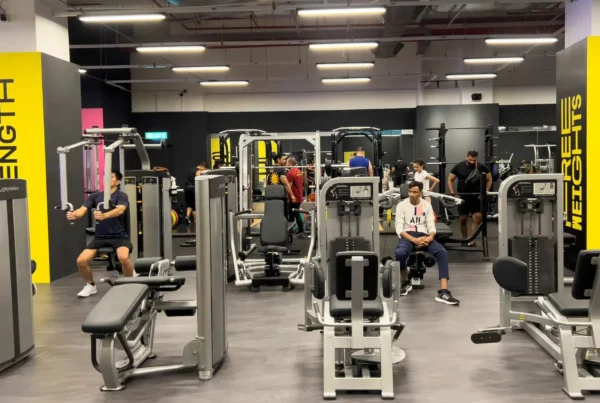
Do a ten minute walk on the treadmill to warm up, then try four or five machines. Resistance machines are ideal at this stage because they guide the movement for you and are hard to do badly. Two sets of ten on each, at a weight that feels noticeably easy.
Yes, easy. You are learning the movement, not testing yourself.
What success looks like this week
You found the changing rooms, you used some machines, and you left feeling like you could have done more. That is a perfect first week. People who go too hard in week one are the people who are too sore to return in week two.

Week Two: Build the Shape of a Session
Now you give the session a structure. The same structure every time, so it becomes automatic.
The template
Five to ten minutes of easy cardio to warm up. Then one exercise for legs, one push, one pull, and one core movement. Then leave. A session does not need to last ninety minutes to count, and a focused forty five minutes beats a distracted two hours.
Sets and reps
Two to three sets of eight to twelve repetitions on each exercise, with about a minute of rest between sets. Choose a weight where the last two reps feel like work but your technique does not fall apart.
How often
Two to three sessions this week, with a rest day between them. Research on training frequency suggests that spreading your work across two or more sessions per week tends to produce better results than doing everything in one go, as covered in this systematic review on resistance training frequency.
Ready to put this into practice?
GoFit has fully equipped gyms across Malaysia, Singapore, and Indonesia — with free weights, squat racks, and all the machines you need to run a proper compound-first workout.
Malaysia: Plaza Mont Kiara · Sunway Square · i-City Shah Alam · Seremban · Penang | Singapore: City Hall · Toa Payoh · Geylang · Great World · Changi · Choa Chu Kang · Clementi | Indonesia: Alam Sutera · Harapan Indah · Trans Studio Cibubur
Week Three: Add a Little, Not a Lot
This is where most beginners either progress sensibly or wreck the whole thing by getting excited.
The one thing rule
Change one variable at a time. Either add a small amount of weight, or one extra repetition, or one extra set. Not all three. Not on every exercise. The gradual increase has a name, progressive overload, and it is the mechanism behind essentially all long term progress.
Start writing it down
Note what you lifted and for how many reps. Your phone is fine. Next week you will not remember, and the record is what turns random sessions into actual training.
Expect the second week wobble
Around now the novelty wears off. The first flush of motivation is gone and the results have not arrived yet, because results take longer than motivation does. This is normal and it is precisely why you picked fixed days in week one. Turn up on your days even when the session is mediocre. Mediocre sessions still count.
Week Four: Make It Boring
The aim of month one is not transformation. It is to make the gym unremarkable.
By now you should know where things are, have a session template you repeat, and be lifting slightly more than you were in week two. That is exactly on track.
What to review at the end of the month
Did you hit your planned sessions. Which exercises do you actually enjoy. What time of day worked best. Is the journey easy enough that you go without negotiating with yourself. Adjust the plan around the answers rather than around what you think you should be doing.
What not to do
Do not add a fourth and fifth session because you are feeling good. Do not switch to a complicated programme you found online. Do not start measuring your progress daily. Month two is for slightly more. Month one was for showing up.
How Much Should You Be Doing, Really?
The World Health Organization recommends that adults do 150 to 300 minutes of moderate intensity activity per week, along with muscle strengthening activities on two or more days. Three gym sessions a week clears the muscle strengthening requirement comfortably and makes a solid contribution to the rest.
The NHS strength and flexibility guidance is a useful free reference if you want to see correct technique demonstrated before you try a movement.
If a movement hurts in a sharp or joint related way, stop and ask a member of staff. Muscle fatigue is normal. Pain is information.
The Things Nobody Tells Beginners
Everyone was new once
Including the person deadlifting twice your body weight. The gym is much less judgemental than it looks from outside.
You can ask
Staff would genuinely rather show you how a machine works than watch you use it incorrectly for a month. Asking is not an admission of failure. It is the fastest available shortcut.
Soreness is not the scoreboard
Being unable to walk down stairs does not mean the session worked. It usually means you did too much too soon. Progress is measured in what you can lift over months, not in how wrecked you feel the next day.
The first month is the hardest one you will ever do
It gets easier. Not because the weights get lighter, but because the decision stops being a decision.
Frequently Asked Questions
How often should a beginner go to the gym?
Two to three sessions a week is the sweet spot. It is enough to make progress, and it leaves recovery time between sessions, which is when your body actually adapts. Going five times in your first week is the most common way beginners burn out.
What should I do on my very first gym session?
Warm up with ten minutes of easy cardio, then try four or five resistance machines for two sets of ten at a light weight. The purpose of session one is to learn the layout and the equipment, not to test your limits.
How long should a beginner workout be?
Around forty five minutes to an hour, including your warm up. Shorter, focused sessions that you repeat consistently beat long sessions you dread and eventually skip.
Should beginners use machines or free weights?
Machines are an excellent starting point because they guide the movement and are easier to learn alone. Free weights are worth adding once you are comfortable, ideally with some coaching on technique.
How long before I see results from going to the gym?
Strength usually improves within two to four weeks, largely through your nervous system becoming more efficient. Visible changes take longer and depend heavily on nutrition and consistency. The first month is about building the habit, and the habit is what produces the results later.
Your Only Job This Month
Turn up on the days you picked. Keep the sessions short enough that you are willing to return. Add a little in week three. That is the whole plan.
If you would rather not work it out alone, most GoFit clubs include an induction to walk you through the equipment, and personal training is there if you want a programme built around your goals. Find your nearest club and book your first session. Week one starts whenever you decide it does.