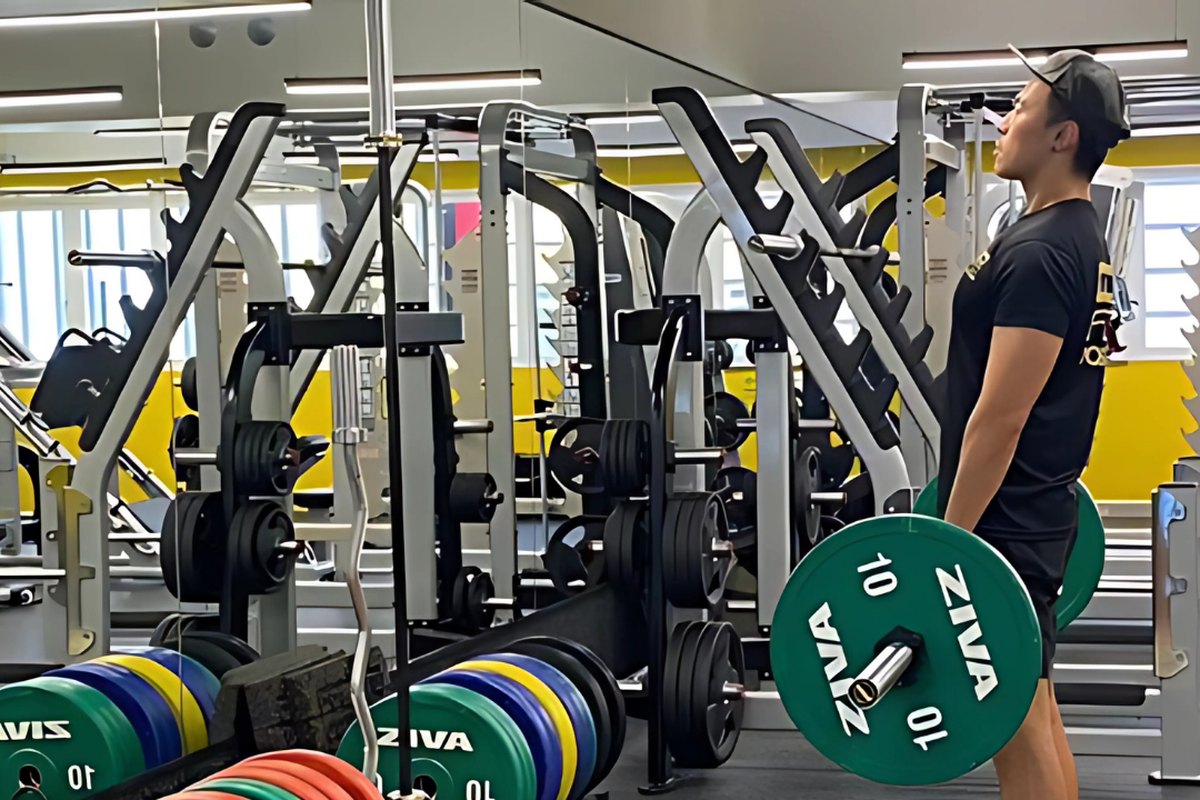
Walk into any gym and you will find an invisible line running down the middle of the floor.
On one side, rows of machines with seats and pins and little diagrams. On the other, racks, barbells and dumbbells, usually occupied by people who look like they know exactly what they are doing.
Beginners tend to assume the machines are the beginner side and the free weights are the real side, and that graduating from one to the other is a rite of passage.
That is not quite how it works.
The Research Might Surprise You
If your goal is building muscle and getting stronger, the choice matters far less than the internet suggests.
A study published in the Journal of Strength and Conditioning Research compared eight weeks of training with free weights against training with machines, looking at muscle mass, strength and hormonal markers. Both groups made gains, and the differences between them were not the dramatic gulf gym folklore implies.
The wider evidence points the same way. What drives progress is training close enough to hard, often enough, with a gradual increase in demand over time. Whether the resistance arrives through a cable, a machine arm or a barbell is a secondary detail.
Which is liberating, frankly. It means the correct answer to “machines or free weights” is usually “the one you will actually use properly”.
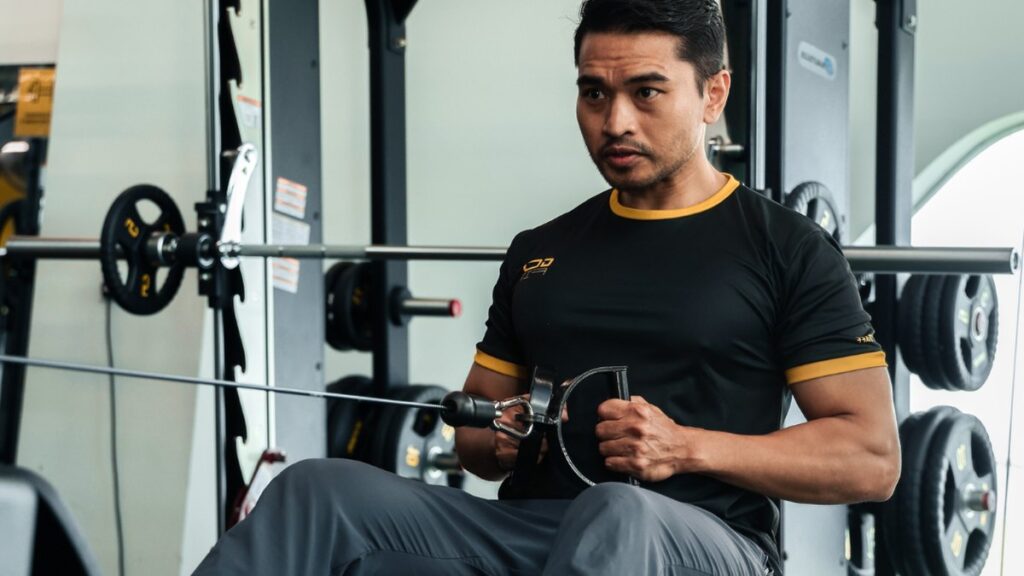
What Machines Are Genuinely Good At
They are easier to learn alone
A machine puts you in roughly the right position and moves along a fixed path. You can have a productive first session with no coaching and no spotter, which matters enormously when you are new and slightly intimidated.
They isolate well
If you want to work one muscle without the rest of the body limiting you, machines do that cleanly. A leg press lets you train your legs hard without your lower back giving out first.
They are efficient when the gym is busy
Adjust a pin, sit down, go. No loading plates, no setting up a rack, no finding a bench.
They are useful when you are tired or coming back from injury
The stability is doing some of the work for you, which is exactly what you want when your control is compromised.
The honest downside
Machines are built for an average body, and you may not be average. If a machine feels wrong at the joints even after you have adjusted the seat, it might simply not fit you. Skip it rather than forcing it.
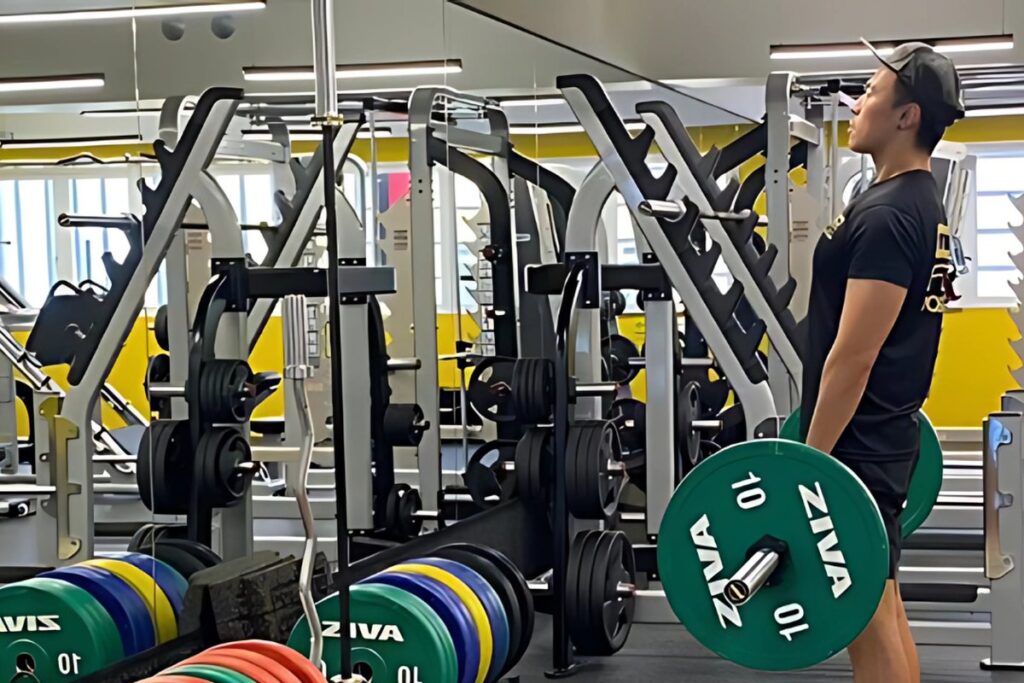
What Free Weights Are Genuinely Good At
They train the stabilising muscles too
Nothing is holding the weight steady except you. Over time that builds coordination and control that carries into everyday life, which is the practical argument for free weights and a good one.
They are flexible
One pair of dumbbells covers dozens of exercises. One rack covers most of a full body programme. You are never waiting for a specific machine to become free.
They allow natural movement paths
Your shoulder and hip joints do not travel in perfect arcs. Free weights let your body find the path that suits your proportions.
They scale for a very long time
You will outgrow the heaviest setting on some machines. You will not outgrow a barbell.
The honest downside
The learning curve is real. Technique matters more, the risk of doing something badly is higher, and some movements are genuinely safer with a spotter or safety bars. This is the argument for a few coaching sessions early rather than for avoiding free weights entirely.
Read also: Beginner Gym Advice from PT Rahman: Real Tips to Start Strong
A Straight Comparison
Ease of learning
Machines win clearly. Free weights need instruction or patience.
Muscle and strength gains
Broadly comparable when effort and progression are matched.
Time efficiency on a busy floor
Machines usually win, unless every machine is occupied and the dumbbells are free.
Carryover to real life
Free weights win, because balance and stabilisation are part of the movement.
Long term ceiling
Free weights win.
Training alone safely
Machines win, particularly for pushing movements near your limit.
So What Should a Beginner Actually Do?
Use both. The debate is a false choice, and the practical answer is a ratio that shifts over time.
Weeks one to four, machines led
Start with mostly machines and one or two simple free weight movements such as a dumbbell press or a goblet squat. You are learning the room, building a habit, and getting comfortable. Machines let you do that without needing anyone to watch you.
Weeks four to twelve, mixed
Add free weight versions of movements you already understand. Dumbbell rows, dumbbell presses, split squats. Keep machines for the exercises where fatigue makes technique wobble, typically at the end of a session.
Beyond three months, free weight led with machine support
Build the session around compound free weight movements, then use machines to add volume for specific muscles without accumulating more fatigue than you can recover from. This is roughly how most experienced lifters train, and they did not arrive there by ideology.
A Simple Full Body Session Using Both
Two to three sets of eight to twelve repetitions on each, with about a minute of rest between sets.
The template
One free weight leg movement such as a goblet squat. One machine push such as a chest press. One free weight or machine pull such as a dumbbell row or seated row. One machine leg movement such as a leg press or leg curl. One core movement.
That is five exercises, it takes about forty five minutes, and it gives you the learning benefits of free weights and the safety of machines in the same session.
For reference on the wider target, the World Health Organization recommends muscle strengthening activity on two or more days per week for adults. This session, done twice weekly, covers it.
The Mistake Worth Avoiding
The most common beginner error is not choosing the wrong category. It is switching constantly.
People try machines for two weeks, read something online, move to free weights, get intimidated, go back to machines, and never stay with anything long enough to progress. Progress comes from repeating movements and gradually adding demand. Pick a template, keep it for six to eight weeks, and let it get boring.
If you are unsure whether your technique is holding up on the free weight movements, that is exactly what a few personal training sessions are for. Most GoFit clubs include an induction on the equipment, and coaches on the floor would rather show you a better setup than watch you battle one for a month.
Read also: The 5 Most Common Beginner Mistakes (And How to Fix Them)
Frequently Asked Questions
Are machines or free weights better for building muscle?
Both build muscle effectively when you train with sufficient effort and progress the load over time. A study in the Journal of Strength and Conditioning Research comparing free weight and machine training found both groups made gains, with no dramatic advantage either way.
Should a complete beginner avoid free weights?
No. Beginners can start with simple free weight movements such as goblet squats and dumbbell presses from day one. What beginners should avoid is heavy barbell work without instruction, particularly training alone near their limit.
Are gym machines safer than free weights?
Generally yes for training alone, because the movement path is guided and the weight cannot fall on you. That said, a machine used with a badly adjusted seat is not automatically safe, so take the time to set it up correctly.
Can I get a full workout using only machines?
Yes. A well designed machine circuit can train every major muscle group and is a perfectly legitimate way to train, especially if it is what keeps you consistent. Adding some free weight work later brings extra benefits for balance and coordination.
How do I know when to move from machines to free weights?
When the machine version feels straightforward and you are no longer thinking about the movement itself. That is the signal you have spare attention to spend on learning a less guided version.
Use Both, Argue Later
Machines are not training wheels and free weights are not a graduation ceremony. They are two tools that do slightly different jobs, and nearly every good programme uses both.
Start with what lets you train confidently this week, add the other as you get comfortable, and keep the plan long enough for it to work. If you want a hand setting that up, find your nearest GoFit club and ask about an induction or a session with a coach.